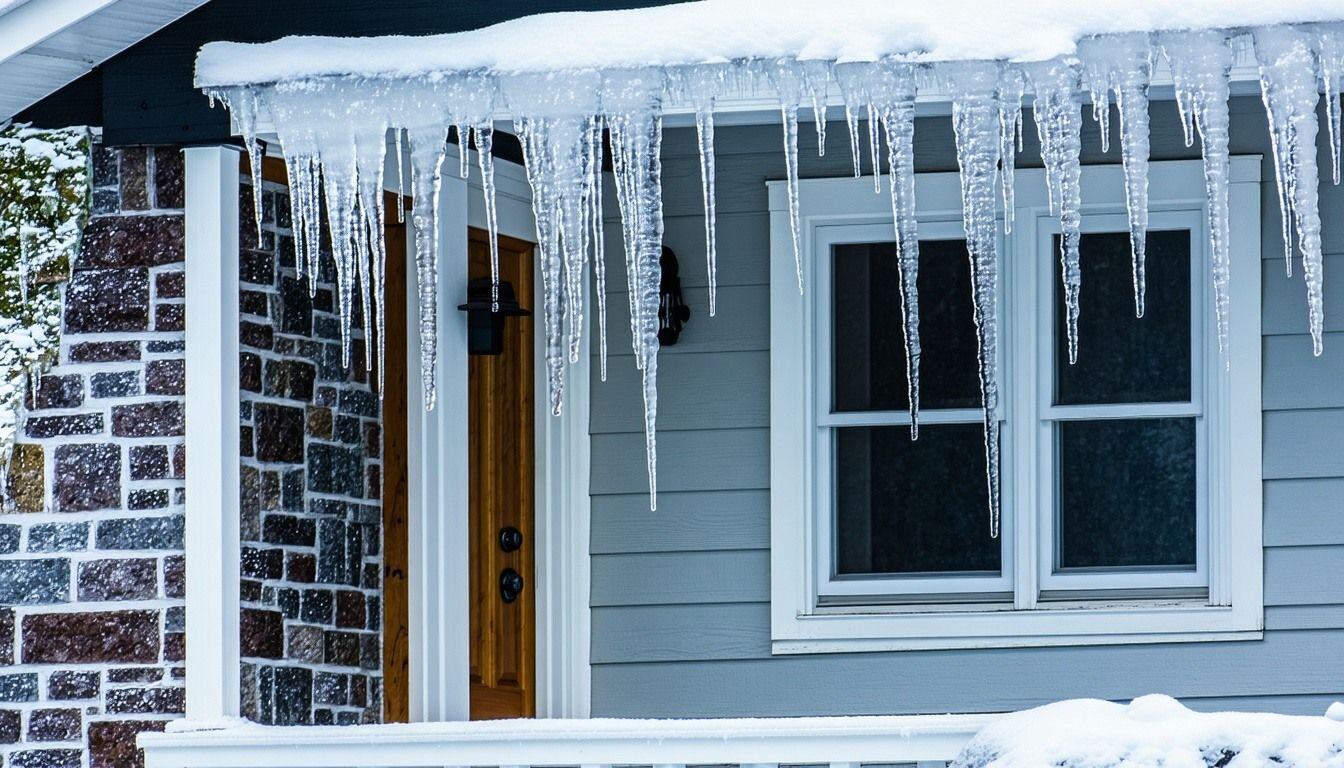

Winter might look magical when your roof is topped with fresh snow and glittering icicles, but those picture-perfect scenes often come with a hidden problem: ice dams.
And once an ice dam sets in, you're dealing with more than a few icicles. You're facing potential leaks, roof damage, wet insulation, mold, and costly repairs.
Let's break down what an ice dam is, what causes ice damming, how to get rid of ice dams, and the best long-term way to prevent ice dams on your roof.
Key Points:
• Ice dams form when melting snow refreezes at the roof edge or inside gutters.
• Common causes include attic heat loss, temperature swings, roof design, clogged gutters, and heavy snowfall.
• Even well-insulated homes can experience ice damming due to sun exposure, cold nights, and uneven roof temperatures.
• Ice dams can lead to roof leaks, shingle damage, mold, wet insulation, fascia rot, and gutter failure.
• Prevention includes air sealing, proper insulation, attic ventilation, clean gutters, and removing heavy snow after storms.
• Spray foam insulation helps prevent ice dams by reducing attic heat loss and keeping roof temperatures more consistent.
What is an Ice Dam?
An ice dam is a ridge of ice that forms along the edge of a roof, typically under a blanet of snow.
When melting snow can't drain off the roof, it refreezes and creates a barrier that traps water. That trapped water has only one place to go: under your shingles and into your home.
How to Prevent Ice Dams on Roofs
Most homeowners searching for information want the solution first, so here it is.
If you're wondering how to prevent ice dams, these four strategies make the biggest difference.
1. Air Seal and Insulate Your Attic
Air sealing is hands-down the most effective long-term solution.
Warm air from your home naturally wants to rise. If your attic isn't sealed, that warm air escapes, heats the roof deck, melts the snow, and starts the ice dam cycle.
Spray foam insulation helps by creating an air barrier to stop heat from escaping and keeps consistent temperatures. This dramatically reduces the chance of melting snow refreezing at the roof edge.
2. Improve Attic Ventilation
Proper ventilation keeps your attic closer to the outdoor temperature.
The goal is not to heat the attic, it's to keep the entire roof evenly cold so the snow doesn't melt in patches.
Balanced soffit and ridge vents help minimize the uneven roof temperatures that lead to ice damming.
3. Clean Gutters Before Winter
Preventing ice dams in gutters is simple:
- Remove leaves
- Clear debris
- Make sure the downspouts drain properly
When gutters are clogged, meltwater pools, freezes, and forms the foundation of an ice dam.
4. Safely Remove Heavy Snow
The more snow piled on your roof, the more meltwater your home will generate.
After big storms:
- Use a roof rake from the ground, or
- Hire a professional if your roof is steep or hard to reach
Less snow means less melting which in turn means fewer ice dams.
What Causes Ice Dams?
Ice dams happen anytime melting snow refreezes at the colder part of your roof or gutters.
Several factors contribute to this, including:
- Attic Heat Loss: Warm indoor air escapes into the attic and warms the roof deck.
- Temperature Swings: Sunny days melt the snow; freezing nights turn it to ice.
- Uneven Roof Temperatures: Valleys, dormers, and shaded spots heat and cool differently.
- Roof Design: Complex rooflines create natural hot and cold zones.
- Heavy Snowfall: Thick snow layers trap heat and melt faster against the roof.
- Clogged Gutters: Water can't drain and freezes into a solid block.
- Wind Patterns: Wind can drift snow into colder pockets, encouraging early refreezing.
Even a well-insulated attic can still experience ice dams during those classic Michigan freeze-thaw cycles, so if you're seeing icicles, you're not alone.
What Damage Can Ice Dams Cause?
Ice dams may start outside, but the problems quickly find their way indoors.
- Roof Damage: Ice lifts shingles and weakens the roof deck.
- Leaks into the Home: Trapped meltwater can seep into ceilings, walls, and insulation.
- Mold and Mildew: Moisture creates the perfect environment for mold growth and poor indoor air quality.
- Soffit and Fascia Damage: Wood can warp, rot, or decay from long-term moisture exposure.
- Gutter Damage: The weight of ice can bend or detach gutters entirely.
Ice Dam Removal: What to Do if You Already Have One
If an ice dam is already on your roof, removing it yourself can be dangerous and can damage shingles.
Professionals use safe methods such as:
- Low-pressure steam
- Specialty heating equipment
- Controlled snow removal
- Professional-grade ice melt products
DIY chipping or salting can do more harm than good and can void roofing warranties.
Keep Ice Dams from Ruining Your Winter
Ice dams don't have to be a yearly frustration.
With the right combination of air sealing, insulation, ventilation, gutter maintenance, and snow management, you can protect your roof and your home from winter water damage.
If you're curious about how RetroFoam of Michigan can help prevent ice dams and improve your home's efficiency, we're here to help.
For a free in-home estimate, fill out the form on our website or call 866-900-3626.
Related Articles
Can Spray Foam Prevent Ice Dams on Your Roof?
9 Existing Home Insulation Problems that Show Up in the Winter
Attic Insulation Problems: Top 5 Things to Watch Out For