

You are thinking about installing spray foam insulation under your roof deck when someone hits you with a warning.
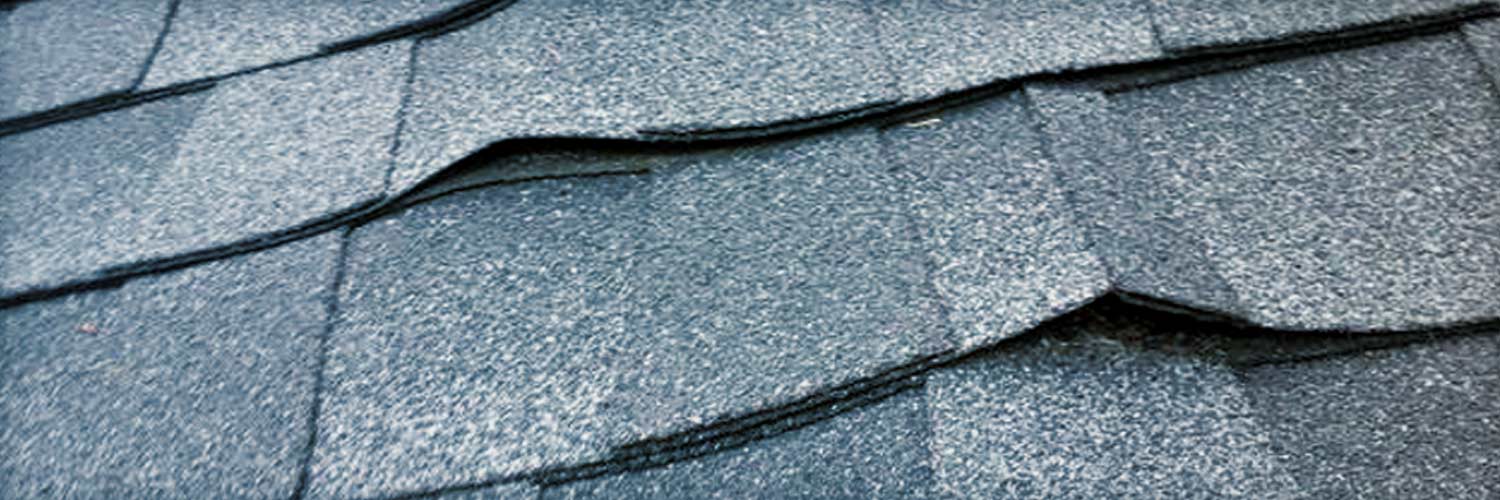
"Be careful. Spray foam creates a hot roof, and that heat will make your shingles curl."
That sounds serious. It also sounds logical at first. If the attic is no longer vented, all that heat must be trapped beneath the shingles, right?
Not exactly.
Spray foam installed beneath the roof deck can make asphalt shingles slightly warmer, but building-science research does not indicate that the small temperature increase normally associated with an unvented attic is enough to make shingles curl or fail prematurely.
That does not mean every roofing material, warranty, or attic assembly is identical. Homeowners should still review the proposed roof design, shingle manufacturer's instructions, and warranty terms before installing spray foam insulation.
RetroFoam of Michigan has more than 20 years of experience insulating homes. During that time, we have heard this concern from homeowners who were told that spray foam insulation and roofing materials cannot safely work together.
Let's look at what a hot roof actually is, how much warmer the shingles may become, and what homeowners should check before insulating the roof deck.
Key Points: Will Spray Foam Damage Roof Shingles
• A hot roof is another name for an unvented roof assembly, not a roof that necessarily reaches dangerously high temperatures.
• Spray foam beneath the roof deck can make asphalt shingles slightly warmer than shingles over a vented attic.
• Building-science research commonly places the average shingle-temperature increase at approximately 2 to 3 degrees Fahrenheit.
• Available research does not show that this small temperature increase normally causes asphalt shingles to curl or fail.
• Roof color, orientation, solar exposure, outdoor temperature, and shingle installation can affect roof temperature and performance.
• Spray foam does not automatically void every shingle warranty.
• Shingle manufacturers may exclude damage related to inadequate ventilation, moisture, improper installation, or failure to follow product instructions.
• Homeowners should review the warranty for their specific shingle product before converting a vented attic into an unvented assembly.
• Shingle-temperature concerns and roof-deck moisture concerns are separate issues that should be evaluated independently.
What is a Hot Roof?
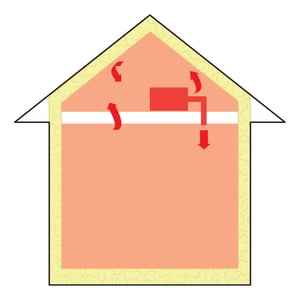 A hot roof is a common term for an unvented roof assembly in which insulation is installed along the roofline instead of the attic floor.
The name makes the roof sound like it's about to become a frying pan. In reality, "hot roof" describes how the assembly is designed, not a specific or dangerous temperature.
A traditional vented attic usually has insulation along the attic floor. Outside air enters through lower vents, such as soffit vents, and leaves through upper vents near the ridge.
The attic remains outside the home's thermal boundary.
When spray foam insulation is installed along the underside of the roof deck, the location of that boundary changes. The roofline becomes the insulation and air-control layer, and the attic is brought inside the home's building envelope.
This is commonly called:
- A hot roof
- An unvented attic
- A sealed attic
- A conditioned attic
- A cathedralized attic
These terms are sometimes used interchangeably, although the exact design and whether the attic receives conditioned air can vary.
The International Residential Code recognizes unvented attic and unvented enclosed rafter assemblies when they meet specific requirements. In other words, an unvented roof is not an experimental loophole someone invented after watching a few home-improvement videos.
It is an established building method that must be designed and installed correctly.
Review the International Residential Code provisions for unvented attics.
Does Spray Foam Make Roof Shingles Hotter?
Yes, shingles over an unvented attic may become slightly warmer, but research indicates that the difference is generally small.
When insulation is installed beneath the roof deck, less attic air moves beneath the sheathing. That change can raise the temperature of the roof deck and shingles compared with a traditional vented attic.
Building Science Corporation reports that a 2- to 3-degree Fahrenheit increase in average asphalt shingle temperature is typical over an unvented attic.
That is quite different from saying spray foam causes the shingles to overheat.
The U.S. Department of Energy has also published research and educational materials examining unvented roof assemblies and shingle temperatures. This body of research generally finds that the effect of attic ventilation on shingle temperature is relatively small.
Other roof characteristics can have as much or more influence on shingle temperature, including:
-
Shingle color
- Roof orientation
- Roof pitch
- Solar exposure
- Outdoor temperature
- Wind conditions
- Roof-deck construction
- Underlayment
- Shading from trees or nearby structures
A dark, south-facing roof exposed to direct summer sun will generally become hotter than a lighter or shaded roof, regardless of whether the attic is vented.
Authoritative Sources:
- Build Science Corporation on attic ventilation and shingle temperatures
- Building Science Corporation research on unvented roof systems
- U.S. Department of Energy presentation on unvented roof assemblies
Will the Extra Heat Make My Shingles Curl?
 The small temperature increase associated with a properly designed unvented attic is not generally considered enough to make sound asphalt shingles curl.
Shingles can curl for several reasons that have nothing to do with spray foam insulation.
Possible causes include:
- Age and normal weathering
- Manufacturing defects
- Improper fastening
- Poor shingle alignment
- An uneven or damaged roof deck
- Multiple layers of shingles
- Installation over an unsuitable surface
- Inadequate ventilation in an assembly designed to remain vented
- Moisture problems
- Severe and prolonged weather exposure
This distinction matters because a homeowner may notice curling shingles after spray foam is installed and assume one caused the other. Timing alone does not prove the source of the problem.
If the shingles are already old, brittle, improperly installed, or near the end of their service life, they may begin curling regardless of the insulation beneath them.
A qualified roofer should inspect curling shingles and determine whether the issue involves age, installation, moisture, materials, or another roofing condition.
Is Spray Foam Insulation Bad for Your Roof?
Spray foam is not inherently bad for a roof, but it must be installed as part of a complete, code-compliant roof assembly.
Spraying the roof deck changes how the attic handles air, heat, and moisture. The existing vents cannot simply be ignored while the rest of the attic remains halfway between vented and unvented.
The insulation contractor should be able to explain:
- Whether the attic is becoming an unvented assembly
- What will happen to the existing vents
- Which spray foam product will be installed
- What insulation thickness and R-Value are planned
- How the air seal will remain continuous
- How condensation will be controlled
- Whether ignition or thermal barriers are required
- How combustion equipment in the attic will be addressed
- Whether the assembly complies with local code
- How the work may affect the roofing warranty
The goal is not to trap heat. It is to create a continuous thermal and air-control layer along the roofline.
When that work is incomplete or poorly planned, the attic may not perform as intended. That is an installation or design issue, not evidence that all spray foam insulation for roofs damages shingles.
Can Spray Foam Help an Attic?
Spray foam at the roofline can be beneficial when the attic contains ductwork, HVAC equipment, finished space, or complicated areas that are difficult to isolate at the attic floor.
In a traditional vented attic, ductwork may be exposed to very hot summer and cold winter temperatures. Moving the thermal boundary to the roofline can bring that ductwork inside the insulated enclosure.
A roof-deck application may make sense when:
- HVAC equipment is located in the attic
- A significant amount of ductwork runs through the attic
- The attic contains finished living space
- The home has complex knee walls or cathedral ceilings
- The attic-floor air barrier would be difficult to make continuous
- The roof and attic were designed for an unvented assembly
Spray foam is not automatically the best choice for every attic.
If the attic is open, accessible, properly vented, and contains no mechanical equipment, air sealing and insulating the attic floor may be a simpler and more cost-effective approach.
A contractor should be able to explain why the roofline is being recommended instead of the attic floor.
Does Spray Foam Void a Roof Shingle Warranty?
Spray foam does not automatically void every shingle warranty, but the answer depends on the shingle manufacturer, product, installation instructions, and cause of a future claim.
This is where homeowners often receive conflicting information.
A roofing contractor may say an unvented attic voids the warranty. An insulation contractor may say it never affects the warranty. Neither blanket statement is reliable enough for every roofing product.
Some warranties exclude damage associated with:
- Inadequate ventilation
- Excessive heat
- Condensation
- Moisture
- Improper roof-deck construction
- Improper shingle installation
- Failure to follow manufacturer instructions
- Alterations to the roofing assembly
That does not necessarily mean installing spray foam cancels the entire warranty. It may mean the manufacturer will not cover damage it determines was caused by an excluded condition.
GAF, for example, states that damage caused by inadequate ventilation is typically excluded from manufacturer warranty coverage. The company also explains that designing a specific roof system remains the responsibility of the appropriate design or roofing professional.
Read GAF's guidance on steep-sloped roof ventilation.
Before installing spray foam, find:
- The name of the shingle manufacturer
- The exact shingle product
- The installation date
- The written manufacturer warranty
- The roofer’s workmanship warranty
- The manufacturer’s installation and ventilation requirements
Contact the manufacturer and describe the proposed assembly. Ask whether installing spray foam on the roof deck affects warranty eligibility or installation requirements.
Whenever possible, get the response in writing.
Spray Foam and Shingle Warranties Are Separate Agreements
The roofing warranty and insulation warranty may cover different products, installers, and types of damage.
A shingle manufacturer may cover qualifying manufacturing defects. The roofing contractor may provide a separate workmanship warranty. The insulation contractor may provide warranties covering the insulation product and its installation.
One warranty does not necessarily take responsibility for another contractor’s work.
Before beginning the project, ask each company what it covers and what it excludes. Keep copies of estimates, contracts, product information, photos, and written warranty responses.
This paperwork is not the exciting part of a home improvement project. It is, however, much more exciting than discovering later that three companies disagree about who is responsible for a problem.
What Should Homeowners Check Before Installing Spray Foam?
Homeowners should verify the condition of the roof, the design of the proposed attic assembly, and the requirements of the shingle manufacturer.
Use this checklist before approving the project.
- Is the roof currently leaking?
- Are the shingles damaged, curled, brittle, or near the end of their service life?
- Is the roof deck dry and structurally sound?
- Will the attic remain vented or become unvented?
- What will happen to the soffit, ridge, gable, and roof vents?
- Why is the roof deck being insulated instead of the attic floor?
- Which spray foam product will be used?
- What thickness and R-Value will be installed?
- How will condensation be controlled?
- Does the design meet applicable code requirements?
- Does the shingle manufacturer allow this assembly?
- What roofing and insulation warranties will apply?
- How will future roof inspections and repairs be handled?
If the roof is nearing replacement, it may make sense to have the roofing and insulation contractors coordinate before either project begins.
Making an Informed Decision About Spray Foam and Roofing
The term “hot roof” has helped keep the shingle-damage myth alive. It sounds like installing spray foam will turn the roof into an oven and send the shingles curling toward the sky.
The research tells a less dramatic story.
Shingles over an unvented attic may be slightly warmer, but the typical difference is small. Available building-science research does not indicate that this increase alone normally causes asphalt shingles to curl or fail.
Before installing spray foam insulation for a roof, have the roof evaluated, ask how the complete attic assembly will work, and check the written shingle warranty. If the roof is already damaged or near replacement, address that work before covering the underside of the roof deck.
The right next step is an attic assessment that considers the roof, insulation, ventilation, moisture, mechanical equipment, and homeowner’s goals together.
If you'd like to learn more about building science and the options you have available to insulate your attic, check out our Learning Center.
Related Articles
Clearing Up Misconceptions about Spray Foam Insulation
Will Spray Foam Void My Roof Shingle Warranty?

Frequently Asked Questions About Spray Foam and Shingles
Does spray foam insulation damage roof shingles?
A properly designed spray foam roof assembly should not damage asphalt shingles simply because the foam is beneath the roof deck. Research shows that shingles may become slightly warmer, but the typical increase is small.
Can a hot roof make shingles curl?
The small temperature increase associated with a properly designed unvented roof is not generally considered enough to make sound shingles curl. Age, installation problems, moisture, manufacturing defects, and roof-deck conditions are other possible causes.
How much hotter are shingles over an unvented attic?
Building-science research commonly identifies an average increase of approximately 2 to 3 degrees Fahrenheit. Actual temperatures vary with roof color, orientation, climate, shading, and construction.
Is a hot roof the same as an unvented attic?
“Hot roof” is a common name for an unvented roof assembly. It does not mean the roof necessarily reaches dangerous temperatures.
Should attic vents stay open after spraying the roof deck?
Not when the attic is intentionally converted into a typical unvented assembly. The contractor should follow the approved roof design, applicable code, and spray foam manufacturer’s requirements.
Does spray foam void the shingle warranty?
Not automatically. Warranty terms vary by manufacturer and product. Homeowners should ask the shingle manufacturer about the specific proposed roof assembly and request a written answer.
Should I replace old shingles before installing spray foam?
It may be wise to replace or repair the roof first if the shingles are damaged or approaching the end of their service life. Have a qualified roofer inspect the roof before covering the underside of the deck.
Can spray foam prevent ice dams?
Insulation and air sealing can reduce heat loss that contributes to ice-dam formation, but they cannot guarantee that ice dams will never form. Roof geometry, snow depth, weather, and other conditions also affect ice-dam risk.